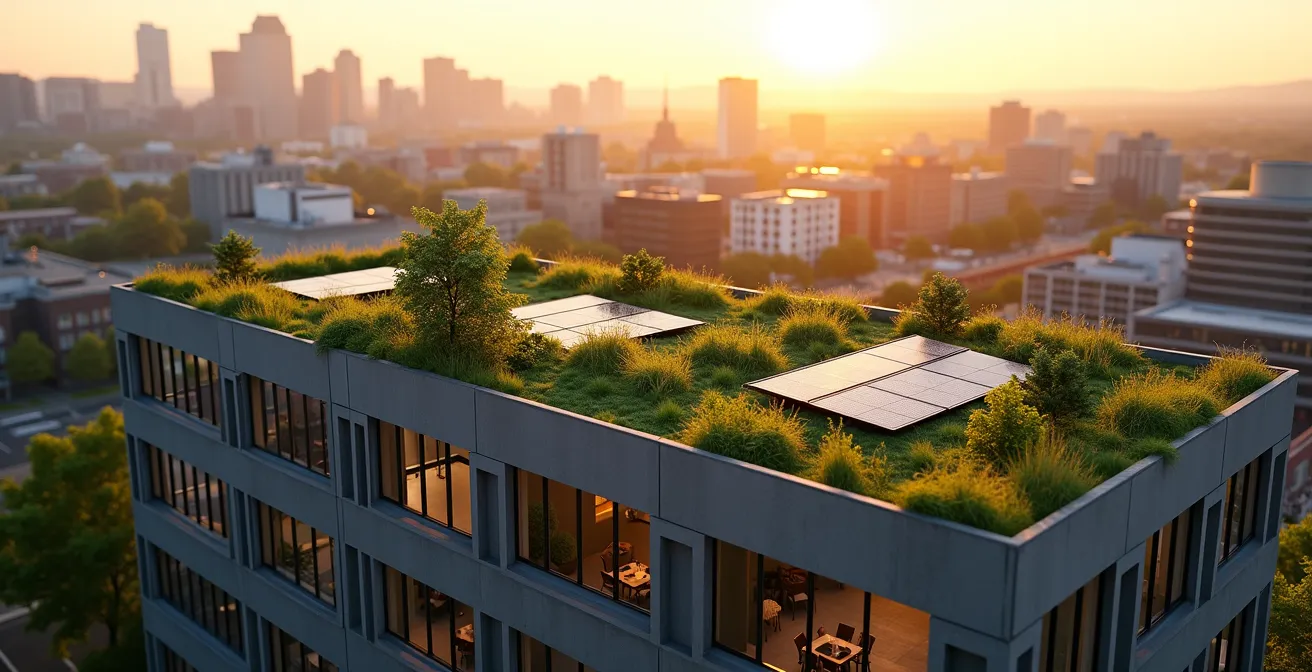
True sustainability for Montreal’s venues is no longer about simple gestures; it’s a strategic overhaul of integrated systems that directly impacts the bottom line.
- Engaging with Hydro-Québec’s demand response programs can turn peak energy usage from a cost into a revenue stream.
- Smart controls and data-driven waste traceability offer a faster ROI and deeper carbon cuts than isolated retrofits alone.
Recommendation: Shift focus from one-off projects to integrated systems that connect energy, water, waste, and logistics for maximum environmental and financial impact.
As an operations director for a major Montreal venue, the pressure to “go green” is relentless. You’re expected to champion sustainability while simultaneously managing budgets, ensuring operational uptime, and navigating complex logistics. The conventional wisdom points towards familiar solutions: installing LED lights, expanding recycling programs, and reducing paper use. While these are positive steps, they often represent a tactical, piecemeal approach that barely scratches the surface of what’s possible and, more importantly, what’s profitable.
The conversation around sustainability is often framed as a cost center, a necessary expense to maintain public image. But what if this paradigm is fundamentally flawed? What if the most impactful environmental initiatives were also the most financially astute? This guide moves beyond the platitudes. We will not rehash the basics of recycling. Instead, we will explore a more visionary yet intensely practical approach: treating your venue not as a collection of separate departments, but as a single, integrated system where intelligent optimizations in one area create cascading benefits across the entire operation.
This strategic shift focuses on data-driven decisions and systems thinking, tailored specifically for the unique operational and regulatory landscape of Montreal. From leveraging Hydro-Québec’s demand response programs to transforming waste management into a source of valuable ESG data, the goal is to uncover opportunities that reduce your environmental footprint while actively strengthening your financial performance. We will explore how to implement these advanced strategies, turning sustainability from a line item into a core component of your venue’s competitive advantage and long-term resilience.
This article provides a detailed roadmap for operations directors ready to move beyond the basics. Explore the following sections to discover practical, ROI-focused strategies for transforming your venue into a model of urban sustainability.
Summary: A Strategic Guide to Slashing the Environmental Footprint of Montreal’s Large Venues
- Why Your Venue’s Peak Energy Demand Is Costing You Thousands in Surcharges?
- How to Install a Green Roof on an Existing Structure Without Leaks?
- LED Retrofit vs Smart Controls: What Cuts Carbon Footprint Faster?
- The Irrigation Flaw That Wastes 40% of Water in Urban Landscaping
- How to Consolidate Deliveries to Reduce Truck Traffic in Dense Zones?
- Private Hauler vs Municipal Collection: Which Offers Better Traceability?
- How to Prune Landscaping to Eliminate Hiding Spots Without Removing Greenery?
- Meeting Provincial Environmental Standards for Brownfield Redevelopment in Montreal
Why Your Venue’s Peak Energy Demand Is Costing You Thousands in Surcharges?
For any large Montreal venue, the single largest line item on your utility bill isn’t just total consumption; it’s peak demand. During critical winter periods, typically between 6-10 AM and 4-8 PM, Hydro-Québec applies significant surcharges for high power usage. Running HVAC systems, powering event lighting, and operating kitchens during these windows can lead to tens of thousands of dollars in extra costs annually. This isn’t just an expense; it’s a strategic vulnerability. However, it’s also a significant opportunity for savvy operators who understand how to turn this liability into a revenue-generating asset through demand response (DR) programs.
Instead of passively accepting these costs, venues can actively participate in grid management. By committing to temporarily reduce power consumption during peak events, you can earn substantial credits on your electricity bill. This isn’t a hypothetical concept. As seen during recent cold snaps, some Quebec businesses like ski resorts have demonstrated this model effectively. For instance, Mont Saint-Bruno strategically delayed opening lifts in the morning in exchange for credits on their electricity bills. This principle is directly applicable to a stadium or concert hall, where you might pre-cool or pre-heat the building outside of peak hours or shift non-essential operations like ice-making or large-scale cleaning.
Qualifying for these programs requires a strategic assessment of your operational flexibility. It’s about identifying which systems can be curtailed without impacting the guest experience and having the control mechanisms in place to execute these changes reliably. The following checklist outlines the concrete steps to evaluate your venue’s eligibility and begin capitalizing on these incentives.
Your Action Plan: Qualifying for Hydro-Québec Demand Response
- Assess your capacity to reduce power demand during peak winter events (6-10 AM and 4-8 PM).
- Inventory all available alternative energy sources or backup generators on-site.
- Evaluate your potential for thermal energy storage (e.g., pre-heating/cooling) or buffering raw materials.
- Check if your building systems can tolerate minor temperature adjustments without disrupting core operations.
- Engage with Hydro-Québec to sign up for the DR Option and receive credits based on your power reduction commitment.
Ultimately, managing peak demand is the first and most impactful step in moving from a passive energy consumer to an active, strategic partner in the grid, unlocking significant financial benefits in the process.
How to Install a Green Roof on an Existing Structure Without Leaks?
A green roof is more than just an aesthetic upgrade; it’s a high-performance building system that reduces stormwater runoff, mitigates the urban heat island effect, and improves insulation. However, for an operations director, the primary concern with retrofitting a green roof onto an existing structure is the risk of water infiltration and leaks. A successful, leak-free installation depends entirely on a multi-layered, technically sound approach that prioritizes waterproofing and drainage above all else.
The key is to think of it not as gardening, but as a specialized roofing project. A modern green roof system is a carefully engineered assembly of membranes, barriers, and layers. A prime Montreal example is the Palais des congrès, which has become a leader in urban agriculture. During its green roof expansion, the venue didn’t just add soil; it made critical structural upgrades. This included installing a new roof lining specifically designed for green roofs and an optimised drainage system to handle Montreal’s heavy rainfall and snowmelt. This highlights that the success of a green roof lies in the infrastructure beneath the plants.
The image below illustrates the critical layers involved in a professional green roof retrofit, showing how each component works together to protect the building’s structural integrity.

As you can see, the system starts with a high-performance waterproof membrane, followed by a root barrier, a drainage layer to channel excess water, a filter cloth to prevent soil from clogging the system, and finally the lightweight growing medium and plants. Once the structural integrity is assured, plant selection becomes the next critical step for longevity and low maintenance in Montreal’s extreme climate. The focus should be on hardy, native species that can withstand both frigid winters and summer heatwaves with minimal intervention.
- Select hardy sedums proven to survive Montreal’s -30°C winters and heavy snow loads.
- Choose native Quebec grasses that require minimal irrigation after establishment.
- Integrate drought-resistant species for summer heatwave resilience.
- Consider vertical growing systems to maximize space efficiency, turning one square foot of floor space into three square feet of green space.
- Plant species that support local pollinators while meeting all building and fire code requirements.
By prioritizing the technical “roofing” aspects before the “green” aspects, you can confidently implement a system that delivers all the environmental benefits without compromising the building envelope.
LED Retrofit vs Smart Controls: What Cuts Carbon Footprint Faster?
The conversation around energy-efficient lighting often begins and ends with retrofitting to LEDs. While replacing legacy bulbs is a necessary first step with a clear ROI, it only addresses one part of the energy equation: consumption per hour. For a large, dynamic venue, the real, deeper savings come from reducing the *number of hours* the lights are on at full capacity. This is where a smart controls integration offers a significantly faster and more profound impact on your carbon footprint and operational costs than an LED retrofit alone.
Smart controls transform a static lighting system into a responsive, intelligent network. By integrating technologies like occupancy sensors, daylight harvesting, and scheduling, you ensure that energy is only consumed when and where it’s needed. For example, in a stadium concourse or convention hall, lights can automatically dim to 20% when the space is empty and instantly return to full brightness when motion is detected. This alone can generate massive savings. Furthermore, integrating lighting with your HVAC system can lead to compounded benefits, as less heat from lighting reduces the summer A/C load. Smart systems are also essential for participating in automated demand response events, as highlighted by Hydro-Québec’s success in achieving a 330 megawatts reduction per event through participant actions—a feat impossible with manual controls.
While an LED retrofit is a capital improvement, smart controls are an operational intelligence upgrade. The following table breaks down the key differences in impact for a typical large Montreal venue.
| Criteria | LED Retrofit Only | Smart Controls Integration |
|---|---|---|
| Winter Heating Load Reduction | Moderate – less heat from bulbs | High – automated optimization |
| Summer A/C Savings | 20-30% from reduced heat | 40-50% with occupancy sensors |
| Hydro-Quebec DR Program Compatibility | Manual participation only | Automated load shedding |
| Emergency Egress Integration | Standard compliance | Dynamic brightness adjustment |
| Security System Integration | Not available | Motion-triggered full brightness |
| ROI Timeline | 3-5 years | 2-3 years with incentives |
The fastest path to carbon reduction is not just changing the bulb, but intelligently controlling the switch. This systems-based approach delivers a shorter ROI and unlocks a new level of building performance and data-driven management.
The Irrigation Flaw That Wastes 40% of Water in Urban Landscaping
For large venues with significant landscaped areas, a staggering amount of water is often wasted due to a single, fundamental flaw: timer-based irrigation systems that operate independently of actual weather conditions. A sprinkler system programmed to run three times a week will do so whether it’s a dry, hot day or in the middle of a classic Montreal summer downpour. This “set and forget” approach is not just inefficient; it’s a significant and unnecessary operational cost and a waste of a vital resource. The solution lies in shifting from a fixed schedule to a weather-adaptive smart irrigation system.
Smart irrigation controllers are the brain of a water-efficient landscaping strategy. These devices connect to local weather stations or use on-site sensors to make real-time decisions. They automatically suspend watering cycles when sufficient rainfall is detected, adjust run times based on temperature and humidity, and can even account for wind to prevent overspray. This ensures that plants receive the precise amount of water they need, exactly when they need it, eliminating the systemic waste inherent in timer-based systems.
Beyond smart controllers, the physical delivery of water can also be optimized. For rooftop gardens and planters, drip irrigation is far more efficient than spray heads, delivering water directly to the root zone and minimizing evaporation. Furthermore, implementing a greywater recycling system, compliant with Quebec’s BNQ plumbing standards, allows you to capture water from sinks and drains to be used for irrigation, dramatically reducing reliance on potable water. The following steps provide a practical framework for implementing a holistic smart irrigation strategy tailored for Montreal’s climate.
- Install weather station-linked controllers to prevent irrigation before, during, and after Montreal’s frequent rainfall.
- Implement drip irrigation systems for rooftop gardens, which can also be used for pesticide-free nutrient delivery.
- Design and create greywater recycling systems that meet Quebec’s specific BNQ plumbing standards.
- Select native Quebec plants that are naturally drought-tolerant and require minimal irrigation after they are established.
- Use soil moisture sensors to provide real-time data, optimizing watering schedules based on actual ground conditions rather than forecasts.
By combining intelligent controls with efficient delivery methods and appropriate plant selection, a venue can drastically cut its water consumption, reduce costs, and create a more resilient and sustainable landscape.
How to Consolidate Deliveries to Reduce Truck Traffic in Dense Zones?
For any venue located in a dense urban core like downtown Montreal or the Quartier des Spectacles, managing the constant flow of delivery trucks is a major operational and security headache. Each delivery—from food and beverage supplies to event equipment and cleaning products—adds to street congestion, increases security screening burdens, and contributes to local air and noise pollution. The traditional model of allowing dozens of individual suppliers to arrive at will is inefficient and unsustainable. A visionary solution is the creation of a shared Urban Consolidation Centre (UCC).
The UCC model fundamentally changes the “last-mile” logistics. Instead of individual suppliers driving directly to your venue, all deliveries are directed to a single, off-site hub located outside the most congested areas. At this hub, shipments for your venue and potentially other neighboring venues are sorted, consolidated, and then dispatched in a single, coordinated final-mile delivery, often using smaller, electric vehicles. This drastically reduces the number of heavy trucks entering the sensitive downtown core, leading to improved pedestrian safety, reduced security bottlenecks at your loading docks, and a lower carbon footprint.
While setting up a UCC requires collaboration, the benefits are immense. It streamlines receiving operations, allows for better security screening in a controlled environment, and provides a powerful narrative for your venue’s sustainability efforts. Montreal’s own Palais des congrès, one of the first carbon-neutral convention centres in the Americas, exemplifies how major facilities can pioneer sustainable logistics while maintaining efficiency. The following steps outline a roadmap for establishing a collaborative UCC.
- Step 1: Form a strategic partnership with neighboring venues in high-traffic areas like the Quartier des Spectacles or near the Bell Centre to build a business case.
- Step 2: Identify a suitable off-site hub location, prioritizing sites with easy highway access and existing or planned electric vehicle charging infrastructure.
- Step 3: Negotiate consolidated contracts with major haulers for both inbound deliveries and outbound waste management to maximize efficiency.
- Step 4: Implement a shared scheduling software system to coordinate and optimize final-mile deliveries using a dedicated fleet of electric vehicles.
- Step 5: Monitor and report on the reduction in truck traffic, and quantify the associated improvements in security, pedestrian safety, and air quality.
By shifting from an individual to a collective logistics model, Montreal’s premier venues can lead the way in creating a quieter, safer, and cleaner downtown experience for everyone.
Private Hauler vs Municipal Collection: Which Offers Better Traceability?
As corporate Environmental, Social, and Governance (ESG) reporting requirements become more stringent, simply “disposing” of waste is no longer sufficient. Operations directors are now expected to provide detailed data on waste streams, diversion rates, and the carbon footprint of their disposal methods. In this new paradigm, data traceability is paramount. When evaluating waste management services in Montreal, the choice between municipal collection and a private hauler often comes down to one critical question: which can provide the granular data needed for robust ESG reporting?
While the City of Montreal’s collection services are reliable, their data reporting is typically aggregated and provided on a monthly or annual basis, which may not be detailed enough for a large venue’s specific needs. Private haulers, on the other hand, have built their premium services around providing this very data. They often leverage technology like IoT-enabled bin sensors that signal when a container is full (optimizing pickup schedules), GPS fleet tracking to calculate route-specific carbon emissions, and digital dashboards that provide per-pickup metrics. This level of detail is invaluable for internal audits, RECYC-QUÉBEC compliance, and external reporting.
This enhanced data comes at a cost, typically a 10-20% premium over standard services. However, the value it provides in terms of compliance, operational efficiency, and brand reputation can far outweigh the expense. For a venue like the Bell Centre, which became North America’s only venue with 3 independent environmental certifications, this level of detailed tracking is not a luxury but a necessity for maintaining its leadership status. The following table compares the traceability features of each option.
| Traceability Feature | Montreal Municipal | Private Haulers (GFL/Ricova) |
|---|---|---|
| ESG Reporting Granularity | Monthly aggregate data | Per-pickup detailed metrics |
| IoT Bin Sensors | Limited pilot programs | Available with premium service |
| RECYC-QUÉBEC Compliance | Automatic reporting | Digital dashboard integration |
| Real-time Tracking | Not available | GPS fleet tracking |
| Carbon Footprint Data | Annual estimates | Route-specific calculations |
| Cost for Enhanced Data | Included | 10-20% premium |
For venues serious about leading in sustainability, investing in a private hauler that offers a robust data platform is a strategic move that transforms waste management from a simple service into a valuable source of business intelligence.
How to Prune Landscaping to Eliminate Hiding Spots Without Removing Greenery?
A secure venue is a successful venue, but traditional security measures can often be at odds with sustainability goals. The desire for open sightlines can lead to the removal of trees and shrubs, creating a sterile environment that is detrimental to biodiversity and aesthetics. However, modern security strategy advocates for a more nuanced approach through the principles of Crime Prevention Through Environmental Design (CPTED). CPTED is about using design to naturally and subtly deter unwanted activity, and a key component of this is strategic landscaping that enhances security *without* sacrificing greenery.
The core idea is not to eliminate plants, but to select and maintain them in a way that preserves natural surveillance. This means keeping shrubs pruned to below one meter in height, allowing clear views across public areas. It involves “limbing up” trees to remove lower branches, preventing anyone from hiding behind the trunk. This approach doesn’t just improve security; it can also enhance the venue’s appeal. The initiative by Tourisme Montréal to beautify downtown alleyways with greenery and art is a perfect example of how security and revitalization can go hand-in-hand, creating spaces that feel community-focused and harmonious.
Instead of a “scorched earth” policy, CPTED landscaping is about making intelligent choices. It’s about territorial reinforcement—using low, thorny bushes along property lines as a natural, uninviting barrier. It’s also about selecting plant species that are native to Quebec and naturally grow in forms that are less dense and more visibility-friendly. This approach allows a venue to maintain a lush, green, and biodiverse environment that actively contributes to a safer and more welcoming atmosphere for patrons.
- Prune all shrubs to maintain a consistent height below 1 meter to ensure clear sightlines for natural surveillance.
- Install low, thorny bushes like barberry as a form of “territorial reinforcement” along non-public property borders.
- Select native Quebec plants that have a naturally open and less dense growth habit.
- Design plant beds and green areas to prevent rodent nesting, especially near food service loading docks and waste disposal areas.
- Work with a landscape architect to maintain clear sightlines from security posts and cameras while preserving pollinator habitat functionality.
By applying CPTED principles, you can create a landscape that is both beautiful and secure, demonstrating that green initiatives and safety protocols are not mutually exclusive but can be powerfully integrated.
Key Takeaways
- Strategic sustainability is not a cost center; it’s a source of operational efficiency, new revenue streams (via DR programs), and enhanced brand value.
- Data is the new currency of green initiatives. Shifting to systems that provide granular data (smart controls, waste tracking) delivers a faster ROI than simple hardware swaps.
- Hyper-local context is critical. Aligning strategies with Montreal-specific programs (Hydro-Québec), regulations (MELCC, BNQ), and climate realities is the key to success.
Meeting Provincial Environmental Standards for Brownfield Redevelopment in Montreal
For many large urban venues, expansion or redevelopment plans can hit a significant roadblock: contaminated land, also known as a brownfield. In Quebec, transforming these sites is governed by a strict regulatory framework under the Loi sur la qualité de l’environnement (LQE) and managed by the Ministère de l’Environnement (MELCC). Navigating this process can seem daunting, but it also presents a profound opportunity to demonstrate environmental leadership and contribute to urban revitalization. Furthermore, Quebec’s energy context, with its 97% renewable electricity, makes these redevelopment projects even more sustainable in the long run.
Meeting provincial standards is not just about cleanup; it’s a structured, multi-phase process that requires meticulous planning, scientific assessment, and community engagement. The journey begins with a Phase I Environmental Site Assessment to identify potential contamination and proceeds through soil characterization, risk assessment, and the development of a remediation plan. The province of Quebec actively supports these projects through funding programs like ClimatSol-Plus, which can help offset the significant costs of decontamination. Successfully completing a brownfield project transforms a potential liability into a valuable, productive asset for the venue and the community.
This process is highly formalized and requires working with certified experts every step of the way. Obtaining the final Certificate of Authorization from the City of Montreal is the culmination of a rigorous process that ensures the land is safe for its intended future use. The following roadmap outlines the critical steps required to navigate Quebec’s brownfield redevelopment compliance process from start to finish.
- Step 1: Conduct a Phase I Environmental Site Assessment (ESA) in strict accordance with Quebec’s LQE requirements to identify historical risks.
- Step 2: Submit a comprehensive soil and groundwater characterization report to the Ministry of Environment (MELCC) for review.
- Step 3: Apply for financial assistance through the provincial ClimatSol-Plus program to help cover decontamination and remediation costs.
- Step 4: Engage the local community through public consultations to transparently discuss the project’s risks, benefits, and long-term vision.
- Step 5: Obtain the necessary Certificate of Authorization from the City of Montreal’s urban planning department before any work begins.
- Step 6: Implement the MELCC-approved remediation plan using provincially certified environmental contractors.
- Step 7: Complete all required post-remediation monitoring and reporting to provincial standards to secure final project closure.
The journey to a truly sustainable venue begins not with a single project, but with a strategic audit of your integrated systems. Start by assessing your facility’s potential for demand response and data-driven optimization to unlock both environmental and financial rewards, turning your commitment to the planet into a tangible asset for your organization.