In summary:
- Effective checkpoint design is not about technology alone, but about mastering the operational friction caused by traffic, weather, and regulations.
- Adopt a “Triage and Divert” model to isolate complex searches and maintain primary lane throughput, preventing gridlock.
- For the Montreal climate, automated, heated under-vehicle scanners offer a significant long-term advantage over manual inspections.
- De-escalation tactics must be paired with strict adherence to Quebec’s Bill 96 language laws to maintain legal and operational integrity.
- Use data-driven triggers, not guesswork, to determine when to open secondary lanes and manage traffic surges effectively.
As a logistics director in Montreal, you live by the clock. Every minute a truck waits at your checkpoint is a minute lost, a cost incurred. The pressure to maintain fluid movement of goods is immense, but it is surpassed only by the non-negotiable mandate to secure your perimeter. You are caught in a constant battle between throughput and security, a challenge magnified by the unique operational realities of our city. The line of trucks idling outside your gate is more than a logistical problem; it’s a vulnerability.
The common responses are predictable: hire more guards, install more cameras, or hope for the best. These are tactical patches, not strategic solutions. They often fail to address the fundamental challenge. The real goal is not to simply balance security and speed, but to design a system that actively masters the sources of operational friction. In Montreal, this friction has distinct names: peak hour gridlock, punishing winter weather, and the complexities of provincial regulations like Bill 96.
But what if the key was not in choosing the ‘best’ technology, but in engineering a resilient, multi-layered system that anticipates and neutralizes these specific pressures? The difference between a perpetually jammed gate and an efficient, secure checkpoint lies in this strategic shift. It is about moving from a reactive posture to a commanding one, where your checkpoint design dictates the flow, rather than being a victim of it.
This guide will provide you with a commander’s framework to achieve that. We will dissect the critical components of a high-efficiency checkpoint, from traffic management and technology selection to de-escalation tactics and regulatory compliance, all through the lens of Montreal’s demanding environment. It is time to stop managing bottlenecks and start commanding your access points.
This article provides a structured approach to building a resilient checkpoint. The following summary outlines the key operational pillars we will cover, from managing traffic flow under pressure to navigating the specific legal landscape of Quebec.
Summary: Designing Efficient Vehicle Screening Checkpoints for High-Security Sites
- How to Screen Delivery Trucks Thoroughly Without Creating a Traffic Jam?
- Mirror on a Stick vs Automated Scanners: Is the Upgrade Worth the Cost?
- The 3 Hiding Spots in Commercial Cabs That Most Guards Miss
- How to Handle an Angry Driver Refusing a Vehicle Search?
- When to Open Secondary Lanes: A Traffic Management Trigger Guide?
- Bicycle Rack vs Concrete Jersey: Which Barrier Stops Vehicle Attacks?
- How to Consolidate Deliveries to Reduce Truck Traffic in Dense Zones?
- Navigating Provincial Security Regulations for Private-Public Partnerships
How to Screen Delivery Trucks Thoroughly Without Creating a Traffic Jam?
The core conflict at any checkpoint is maintaining thoroughness without causing catastrophic traffic backlogs. In a city like Montreal, where peak hours see 28% average congestion, a single slow inspection can cripple your operations. The solution is not to speed up inspections, but to re-engineer the flow. The objective is to create a system that can absorb variability and isolate time-consuming events from the main traffic artery. This is achieved through a “Triage and Divert” methodology.
Inspired by high-performance airport screening, this model funnels all vehicles through a rapid initial assessment. This is not a full search. It’s a 30-second check of credentials, driver demeanor, and obvious vehicle issues. 90% of your traffic should clear this stage and proceed. The remaining 10%—those with paperwork discrepancies, unusual cargo, or triggering other flags—are immediately directed to a dedicated secondary inspection area. This simple act of diversion is the single most effective strategy for preventing a single complex search from halting all traffic.
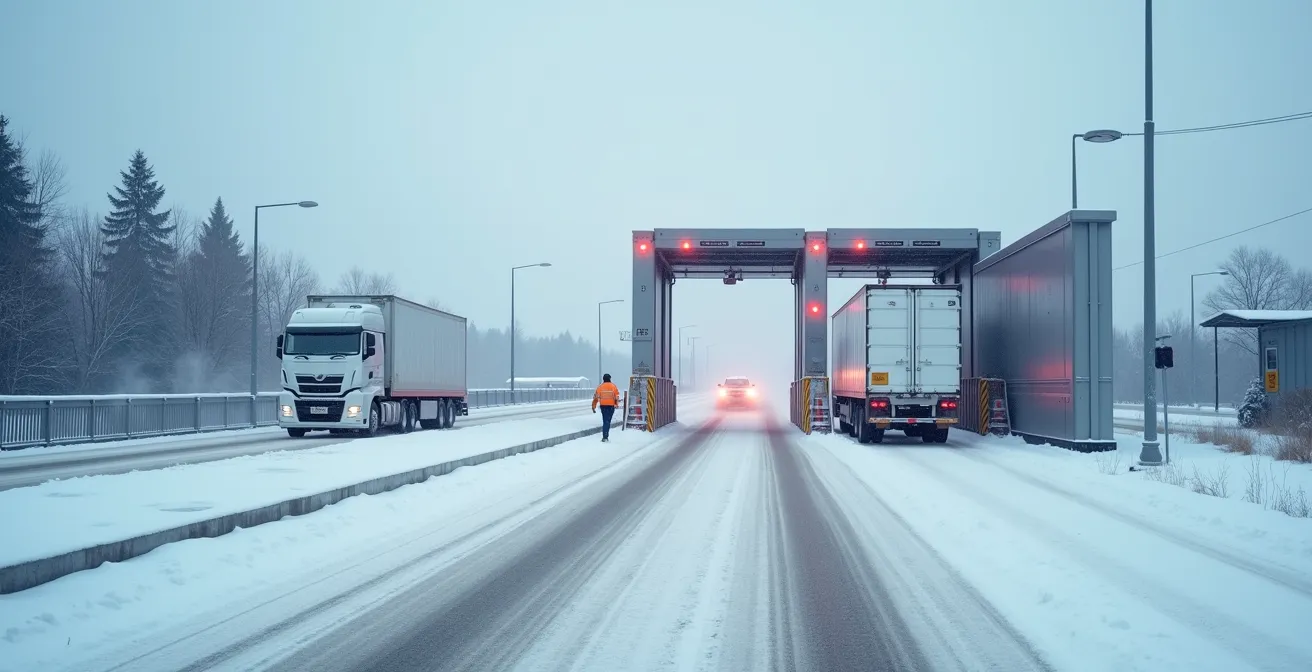
This system design must also account for climatic hardening. During Montreal’s winters, you must implement differentiated screening time allowances for severe weather. At -20°C, manual tasks take longer and are more prone to error. Building this buffer into your throughput calculations prevents systemic collapse during a snowstorm. The goal is system resilience, ensuring that one anomaly—whether a suspicious vehicle or a sudden blizzard—does not compromise the entire security posture.
By separating standard flow from exceptional cases, you maintain momentum in your primary lanes while ensuring that potential threats receive the detailed scrutiny they require, all without bringing your logistics to a standstill.
Mirror on a Stick vs Automated Scanners: Is the Upgrade Worth the Cost?
The decision to upgrade from manual under-vehicle inspection mirrors to automated scanning systems is a significant capital expenditure. A commander must justify it not on novelty, but on operational impact and return on investment. While the initial cost of an automated system can exceed $525,000 CAD, the long-term benefits in efficiency, accuracy, and staffing create a compelling business case, especially in a high-volume, four-season environment like Montreal.
Manual mirrors are fundamentally flawed. They are slow, requiring 3-5 minutes per vehicle, and their effectiveness is entirely dependent on guard diligence and weather conditions. In a Montreal winter, a mirror’s surface can be obscured by ice, salt, and slush, rendering it nearly useless. Automated Under-Vehicle Imaging Systems (UVIS) solve these problems. They scan a vehicle in seconds, not minutes, capable of processing over 100 vehicles per hour. Heated systems maintain perfect operational capability even in sub-zero temperatures, providing what we call climatic hardening for your checkpoint.

As the image contrasts, the difference between frozen, degraded manual tools and robust, all-weather automated technology is stark. Beyond speed, these systems offer superior threat detection. They create a high-resolution image of each vehicle’s undercarriage and use software to compare it against a reference image of the same vehicle type, automatically flagging anomalies. This removes human error and creates a searchable digital record for every vehicle that enters your site. Early adopters report a 30% reduction in on-site security staffing dedicated to this task, a significant operational saving that directly impacts the ROI calculation.
The following table breaks down the core factors, making the cost-benefit analysis clear. While the upfront investment is high, the gains in throughput, data collection, and all-weather reliability represent a strategic upgrade, not just a technological one.
| Factor | Manual Mirror | Automated Scanner |
|---|---|---|
| Initial Cost | $200-500 CAD | $525,000+ CAD (2025) |
| Annual Staffing | 2-3 FTE required | 30% reduction possible |
| Detection Speed | 3-5 minutes/vehicle | 100+ vehicles/hour |
| Winter Performance | Degraded visibility | Heated systems maintain operation |
| Data Collection | No recording capability | 3-second automated threat recognition |
| Growth Rate | Static market | 4.5% CAGR through 2033 |
For a high-security site in Montreal, an automated scanner is not a luxury; it is a critical component for building a resilient, efficient, and data-driven security posture.
The 3 Hiding Spots in Commercial Cabs That Most Guards Miss
A truck’s cab is a complex environment, and a cursory glance is insufficient for a thorough security screen. Complacent guards often perform a “visual sweep” that misses common and sophisticated concealment spots. A truly secure checkpoint requires a tactile and sensory search protocol that goes beyond the obvious. Your team must be trained to look, feel, and listen for inconsistencies. The Port of Montreal’s ongoing efforts with law enforcement to intercept stolen vehicles highlights the reality that commercial trucks are prime targets for illicit transport, making cab searches a critical security layer.
Three areas are consistently overlooked during rushed inspections:
- Seat Cushions and Sleeper Mattresses: A simple visual check is useless. Guards must be trained to apply firm pressure across the entire surface of seats and mattresses, feeling for hard objects or unnatural variations in density. A modified cushion can easily conceal weapons, electronics, or contraband.
- Interior Paneling (Doors, Dashboard, Sleeper Walls): Smugglers often create hidden compartments behind factory panels. Guards must be trained to tap these surfaces, listening for hollow sounds that indicate a void behind the panel. They should also look for subtle signs of tampering, like fresh tool marks on screws, misaligned panels, or non-factory sealants.
- Auxiliary Power Unit (APU) Housings: The APU, typically mounted on the frame rail behind the cab, provides power to the sleeper compartment. Its housing is often ignored during searches, yet it offers significant space for concealment. Guards must inspect these units for non-standard access panels, unusual wiring, or signs that the housing has been modified.
These physical checks should be supplemented with technology where possible. A handheld thermal imager, for instance, is invaluable during cold weather, as it can detect heat signatures from a person hiding in a sealed trailer or a recently-used electronic device concealed within a compartment. To operationalize this, your training must be built around a concrete, repeatable process.
Action Plan: Implementing a Tactile & Sensory Cab Search Protocol
- Feel for density inconsistencies in seat cushions by applying pressure at multiple points.
- Listen for hollow sounds when tapping on door panels and dashboard sections.
- Check for fresh tool marks on factory-installed components, especially behind sleeper cab panels.
- Inspect auxiliary power unit (APU) housings for modifications or non-standard access points.
- Use handheld thermal imagers to detect heat signatures from hidden compartments or persons in cold conditions.
By shifting from a passive visual scan to an active, multi-sensory inspection, you drastically increase the probability of detecting concealed threats and reinforce a culture of thoroughness among your security personnel.
How to Handle an Angry Driver Refusing a Vehicle Search?
A driver refusing a search is one of the most challenging scenarios at a checkpoint. It immediately introduces operational friction, stops traffic, and carries the potential for escalation. The response must be guided by a clear, pre-defined protocol that prioritizes de-escalation, officer safety, and strict legal compliance, particularly with Quebec’s language laws.
The first step is de-escalation. The guard’s posture and tone are critical. They must remain calm, professional, and non-confrontational, maintaining a safe distance. The goal is to shift the interaction from a conflict to a procedural explanation. The guard should clearly and calmly state the policy: “Sir/Ma’am, as a condition of entry to this secure facility, all vehicles are subject to search.” This is a statement of policy, not a personal request. No argument should be entered into.
This is where regulatory compliance with Bill 96 becomes paramount. A legal analysis of the law is clear: while you can respond in English to a driver who initiates contact in English, your personnel should always offer the option to communicate in French. Furthermore, all posted signage stating the search policy must be fully compliant with Quebec’s language laws. As a defense and security legal expert noted regarding Bill 96, the Charter is clear that employers must take all reasonable steps to avoid language requirements other than French. This is not a suggestion; it is a legal requirement for operating in the province.
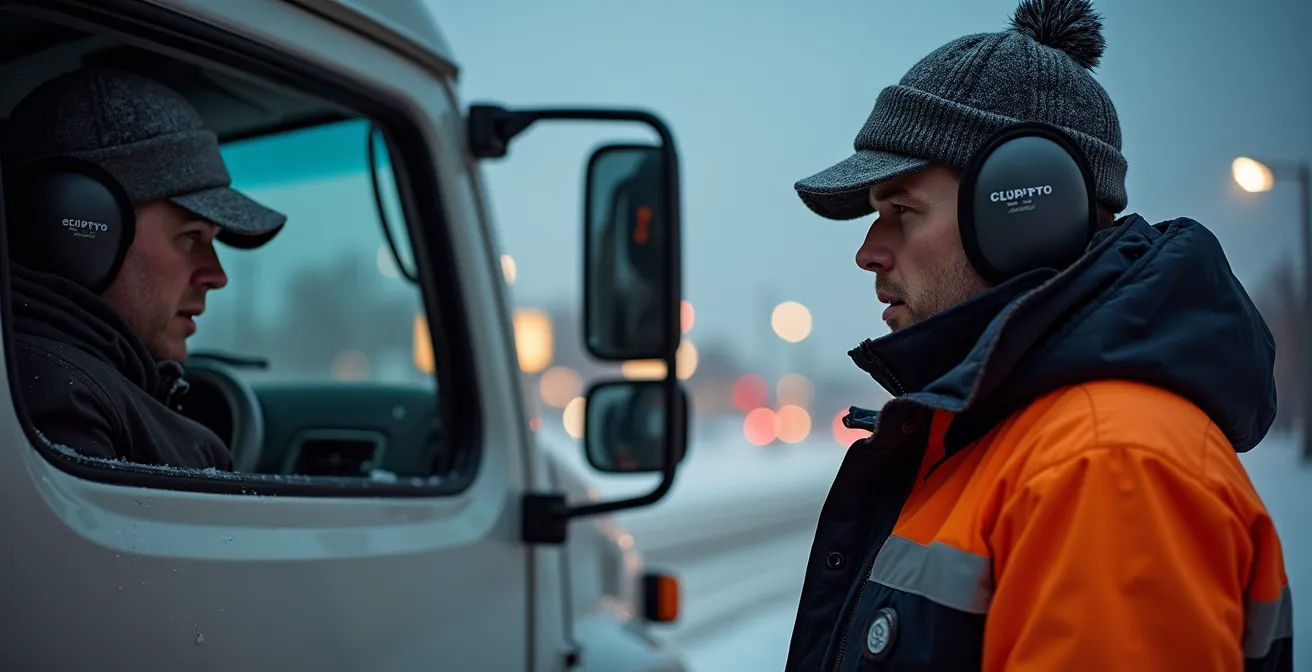
If the driver continues to refuse, the protocol is simple and absolute: Deny Access. The vehicle is directed to a refusal/rejection lane away from the main flow to be turned around and escorted off the property. The incident must be documented immediately, noting the time, driver/vehicle details, and the reason for refusal. According to final regulations coming into force June 1, 2025, this includes keeping proper documentation of any requests for communications in languages other than French. At no point should a guard attempt to physically force a search. Your checkpoint is your territory; entry is a privilege, not a right.
By having a firm, legally sound, and universally understood procedure, you remove ambiguity for your guards and ensure that a confrontational individual does not compromise the security or legal standing of your operation.
When to Open Secondary Lanes: A Traffic Management Trigger Guide?
Opening and closing secondary screening lanes cannot be a gut decision. It must be a data-driven response to predictable traffic patterns and predefined triggers. Managing throughput dynamics effectively means you are proactive, not reactive. The goal is to absorb surges before they create gridlock, maintaining an optimal balance between security posture and operational tempo. Relying on a guard’s visual assessment of a “long line” is inefficient and inconsistent.
Your primary trigger should be based on a simple metric: Queue Length + Wait Time. Establish clear thresholds. For example: “Trigger A: When the queue exceeds 10 vehicles OR the wait time for the last vehicle in line exceeds 15 minutes, open secondary lane one.” The 15-minute grace period is a proven concept, successfully used in systems like the YUL Express pre-booking at Montreal-Trudeau to manage passenger flow effectively. It provides a realistic buffer that prevents premature reactions to minor fluctuations.
To set these thresholds, you need data. Analyze your own gate logs to identify peak ingress/egress times. Supplement this with external benchmarks. For example, performance data shows that Montreal-Trudeau processes an average of 112 passengers per hour per screening line. While passengers are not trucks, this CATSA metric provides a valuable benchmark for what a well-oiled screening lane can handle. If your vehicle throughput per lane drops significantly below a comparable benchmark, it signals a systemic inefficiency that needs to be addressed, not just compensated for with another lane.
Secondary triggers must account for predictive intelligence. This includes:
- Scheduled Surges: Are you aware of a convoy of 20 trucks arriving at 10:00 AM? The secondary lane should be opened at 9:45 AM in anticipation.
- Weather Alerts: Is a major snowstorm forecast? Activate your severe weather protocol, which should include opening additional lanes to compensate for the inevitable slowdown in processing times.
- Upstream Incidents: A major accident on a nearby highway could divert traffic to your facility. Your team should be monitoring local traffic alerts to anticipate such unscheduled surges.
By replacing subjective decision-making with a clear, data-informed trigger guide, you transform your checkpoint from a reactive bottleneck into a dynamic, responsive, and efficient security system.
Bicycle Rack vs Concrete Jersey: Which Barrier Stops Vehicle Attacks?
Selecting the right vehicle barrier is a critical decision that balances security, aesthetics, and operational reality. A common mistake is choosing a barrier based on appearance or convenience without understanding its certified stopping power, known as a K-rating. A K-rating certifies a barrier’s ability to stop a vehicle of a specific weight at a specific speed. For a high-security site, deploying non-rated barriers is an unacceptable risk. A standard bicycle rack may define a pedestrian walkway, but it offers zero resistance to a hostile vehicle attack.
The choice is a trade-off between stopping power, deployment speed, and visual impact. A Concrete Jersey Barrier is a workhorse of perimeter security. It offers a strong K-rating (from K4 to K12, capable of stopping a 15,000 lb vehicle) and is largely unaffected by Montreal’s harsh winters. Its primary drawbacks are its low aesthetic score and the time required for deployment. In contrast, a reinforced decorative planter can achieve a K4 rating while offering high aesthetic value, but it requires proper drainage to prevent damage during freeze-thaw cycles.
The table below outlines the critical trade-offs for barrier solutions suitable for the Quebec climate. It highlights the importance of looking beyond the simple visual and considering the full operational lifecycle, especially winter performance.
| Barrier Type | K-Rating | Aesthetic Score | Winter Performance | Deployment Time |
|---|---|---|---|---|
| Bicycle Rack | None | High (8/10) | Poor – Ice accumulation | Immediate |
| Concrete Jersey | K4-K12 | Low (3/10) | Excellent – Unaffected | 2-4 hours |
| Retractable Bollards | K4-K12 | Medium (6/10) | Moderate – Ice clogging risk | Permanent install |
| Decorative Planters | K4 (reinforced) | High (9/10) | Good – Requires drainage | 4-6 hours |
For Montreal, any permanent or semi-permanent barrier selection must be evaluated for its resistance to the freeze-thaw cycle. Foundations must be deep enough (minimum 4-foot depth) to prevent heaving, and materials must be rated for a temperature range of at least -30°C to +35°C. For temporary needs, such as securing perimeters during Montreal’s numerous summer festivals, removable solutions that still carry a K-rating are optimal, but their anchoring points must be engineered for repeated use.
Ultimately, the decision must be driven by a realistic threat assessment. For critical infrastructure, sacrificing a certified K-rating for aesthetics or convenience is a gamble that a security commander cannot afford to take.
How to Consolidate Deliveries to Reduce Truck Traffic in Dense Zones?
For facilities in dense urban areas, the most effective way to reduce checkpoint congestion is to decrease the number of trucks that need to be screened in the first place. An Urban Consolidation Center (UCC) is a strategic solution to this problem. A UCC is an off-site logistics hub where multiple vendors deliver their goods. These goods are then sorted, security-screened, and consolidated onto a smaller number of pre-cleared vehicles for final-mile delivery to your facility.
This model fundamentally changes your security perimeter. Instead of screening dozens of individual, unknown trucks at your main gate, you screen a handful of known, sealed, and pre-cleared electric vehicles. This drastically reduces the operational friction at your most vulnerable point. The key is to design the UCC with a security-first mindset. The consolidation hub itself becomes a primary security checkpoint, equipped with the same level of screening technology, such as radiation detection portals, that you would find at a major installation like the Port of Montreal.
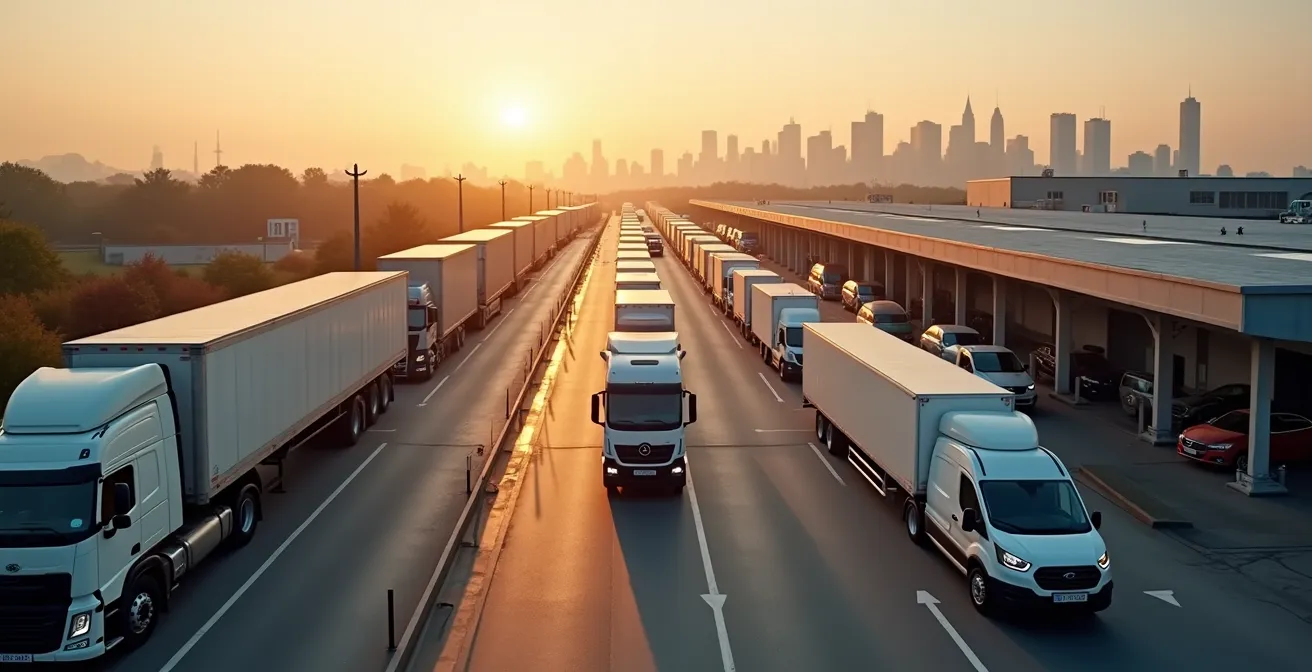
The placement of this hub is critical and must be informed by traffic analysis. Quebec’s Projet Colibri, which analyzed traffic flow from 4,500 collection sites, provides a blueprint for how to use data to determine optimal hub locations that account for seasonal variations in traffic patterns (DJME vs. DJMH). A properly located UCC intercepts goods before they enter the most congested city zones.
Implementing a successful UCC program requires buy-in from your vendors, which can be encouraged through incentives. These can include:
- Priority Unloading Zones: Participants in the consolidation program get access to dedicated, fast-track unloading areas at your facility.
- Off-Peak Delivery Windows: Offer reduced security or access fees for deliveries made to the UCC during off-peak hours (e.g., 10 PM to 5 AM).
- Streamlined Payments: A centralized system can simplify invoicing and payment for all participating vendors.
By moving the bulk of your screening activities off-site, you not only enhance security and efficiency but also reduce noise, emissions, and traffic impact on the surrounding community—a significant benefit for any operation in a dense urban core.
Key Takeaways
- System Resilience over Technology: A successful checkpoint absorbs operational friction from traffic, weather, and regulations, rather than just relying on new equipment.
- Data-Driven Triggers: Replace subjective decisions with clear, data-based thresholds for managing traffic flow and lane allocation to prevent bottlenecks proactively.
- Compliance is Non-Negotiable: Adherence to Quebec’s Bill 96 is not an administrative task but a core component of checkpoint operational integrity and legal standing.
Navigating Provincial Security Regulations for Private-Public Partnerships
Operating a high-security facility in Quebec, especially within a private-public partnership, requires more than just physical security expertise; it demands rigorous adherence to provincial administrative and language laws. Overlooking these regulations, particularly the Charter of the French Language (Bill 96), exposes your operation to significant financial penalties and legal challenges. Ignorance is not a defense. Regulatory compliance is a foundational pillar of your security posture.
The financial risks are substantial. Under the enhanced enforcement provisions, fines for non-compliance with Bill 96 have increased dramatically, with first offenses potentially reaching $30,000, and subsequent violations facing doubled or tripled penalties. This applies to everything from public signage and customer communication to internal documentation. As a commander, you must ensure your entire operation is compliant, as any infraction can jeopardize contracts and your license to operate.
For any partnership involving Quebec’s civil administration, the rules on documentation are strict. Legal guidance from firms like DLA Piper is unequivocal: written documents, including contracts and official correspondence, must be drawn up in French. While a version in another language can be attached, the French version is the sole official document. This principle extends to all operational procedures and incident reports that may be shared with public partners. Your record-keeping must be flawless and in the correct language.
Your next step is to conduct a thorough audit of your current checkpoint operations against the principles outlined in this guide. Evaluate your traffic management protocols, your technology’s winter performance, your team’s search procedures, and, most critically, your full compliance with all provincial regulations. This audit will reveal your points of operational friction and provide a clear roadmap for building a truly resilient and efficient security system.