
In summary:
- Effective illness prevention in the workplace goes beyond basic hygiene; it requires managing the building’s environmental systems.
- Focus on upgrading HVAC filtration, implementing structured disinfection schedules, and ensuring chemical safety to reduce transmission risks.
- Stagnant water in plumbing and features is a significant, often overlooked, source of pathogens like Legionella.
- In Quebec, a formal prevention program compliant with CNESST regulations is not just best practice—it’s a legal requirement.
As an HR Director or Office Manager in Montreal, a spike in sick leave during flu season is a familiar and costly problem. The standard response often involves emails reminding staff to wash their hands and distributing bottles of hand sanitizer. While these measures have their place, they address only a fraction of the issue and place the burden of responsibility on individual employee behaviour. This approach fundamentally misses the larger, more impactful sources of workplace transmission.
The true drivers of widespread illness in an office are often invisible, embedded within the very infrastructure of the building. These are environmental systems—the air circulating through the vents, the water sitting in the pipes, and the chemicals stored in the janitor’s closet. Tackling sick leave effectively requires a paradigm shift: from focusing on personal hygiene to implementing rigorous, procedural management of these environmental systems. This isn’t just about cleaning; it’s about engineering a healthier workspace from the ground up.
This guide provides a procedural framework for establishing robust hygiene protocols that address these hidden risks. We will move beyond the basics to explore how to manage your building’s air quality, create effective disinfection plans, handle chemical safety according to Quebec law, and develop a comprehensive prevention program that meets CNESST standards. By focusing on systems, you can create a resilient work environment that proactively protects your workforce.
This article details the critical components of an advanced sanitary protocol for your Montreal office. Below is a summary of the key areas we will cover, from managing airborne threats to ensuring full compliance with local health and safety regulations.
Summary: A Comprehensive Guide to Office Health and Safety Protocols in Montreal
- Why Poor Ventilation Is the Real Culprit Behind Your Office Flu Outbreaks?
- How to Create a Disinfection Schedule That Cleaning Staff Will Actually Follow?
- Bleach vs Quaternary Ammonium: Which Is Safer for Daily Office Use?
- The Breakroom Habit That Spreads Germs Faster Than a Handshake
- What to Do in the First 2 Hours After an Employee Reports a Contagious Infection?
- The Storage Compatibility Error That Can Cause Toxic Fumes in Your Janitor Closet
- The Irrigation Flaw That Wastes 40% of Water in Urban Landscaping
- Creating a Prevention Program That Meets CNESST Requirements for Small Businesses
Why Poor Ventilation Is the Real Culprit Behind Your Office Flu Outbreaks?
While surface transmission is a known risk, the primary vector for respiratory viruses like influenza is aerosol transmission. Infected individuals exhale microscopic virus-laden particles that can hang in the air for hours, especially in poorly ventilated spaces. An office with a substandard HVAC (Heating, Ventilation, and Air Conditioning) system effectively recirculates this contaminated air, exposing the entire workforce. This makes managing your building’s air quality the single most impactful measure for reducing airborne illness.
The key to effective air filtration lies in the quality of the filters used in your HVAC system. Filters are rated on a MERV (Minimum Efficiency Reporting Value) scale. Basic systems often use MERV 8 filters, which are insufficient for capturing tiny viral particles. Health Canada guidance now strongly recommends upgrading to MERV 13 filters or higher in office buildings with return air systems. These filters are significantly more effective at capturing airborne contaminants. In fact, research shows that using higher-rated filters can result in 30.9% lower PM2.5 concentrations—a key indicator of fine particulate matter that includes viruses.
However, upgrading is not a simple swap. Higher MERV-rated filters are denser and can increase pressure on the HVAC system, potentially reducing airflow if the system isn’t powerful enough. It is crucial to consult your HVAC provider to assess your system’s capabilities. Key questions to ask include whether the system can handle MERV 13 filters without compromising airflow, what the current outdoor air supply rate is compared to ASHRAE standards, and if filters are properly sized to prevent air bypass. A balanced, well-maintained system with appropriate filtration is a non-negotiable component of a modern, healthy office.
How to Create a Disinfection Schedule That Cleaning Staff Will Actually Follow?
A vague directive to “clean more often” is destined to fail. Effective disinfection relies on a structured, clear, and manageable schedule that prioritizes effort where it matters most. The most successful approach is a zone-based cleaning model, which categorizes office areas by traffic and risk, then assigns specific cleaning frequencies to each. This ensures that high-risk areas receive constant attention while preventing wasted effort in low-use spaces.
A practical zone-based schedule for a Montreal office would look like this:
- High-Traffic Zones: These include reception areas, elevator lobbies and buttons, and main corridors. These surfaces should be disinfected every 2-4 hours during business hours.
- Medium-Traffic Zones: Meeting rooms and breakrooms fall into this category. They should be cleaned after each use, or at a minimum, twice daily.
- Low-Traffic Zones: Storage areas or infrequently used offices can be cleaned weekly, with a log to document completion.
To make the schedule easy for cleaning staff to follow, visual aids are paramount. A color-coded map of the office with clearly defined zones and universal pictograms for cleaning tasks can overcome language barriers and reduce confusion. This visual schedule should be posted prominently in janitorial closets. It’s also critical to provide training on proper disinfectant use, especially regarding dwell times—the amount of time a disinfectant must remain wet on a surface to be effective. This information is specified on the product label and is crucial for actually killing pathogens.
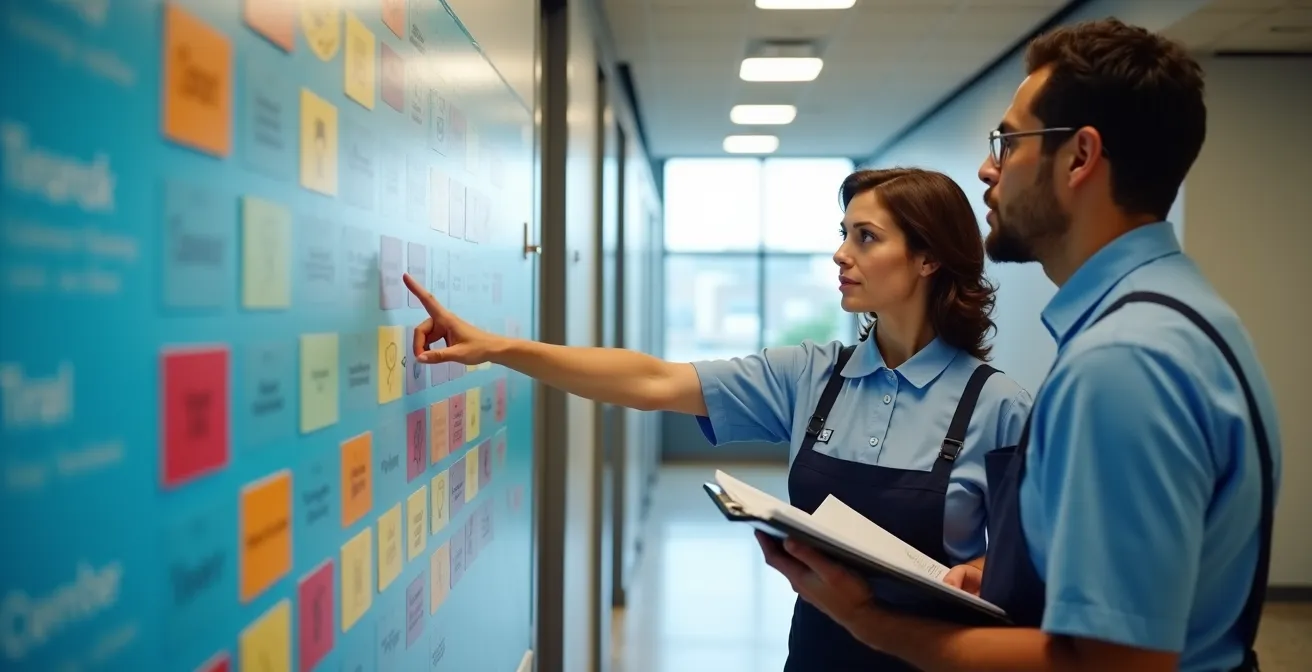
Furthermore, preventing cross-contamination between zones is essential. This is achieved by using dedicated cleaning cloths for each zone (e.g., red for washrooms, blue for general office space) and ensuring cloths are changed or laundered daily, or immediately when visibly soiled. A clear, visual, and well-equipped system transforms cleaning from a chore into a critical infection control procedure.
Bleach vs Quaternary Ammonium: Which Is Safer for Daily Office Use?
Choosing the right disinfectant is a balance between effectiveness and safety, especially for surfaces that employees touch frequently. While bleach (sodium hypochlorite) is a powerful, broad-spectrum disinfectant, its use in a general office setting comes with significant drawbacks. It is corrosive to many surfaces, including metals, and its strong odour can be irritating to employees, particularly those with respiratory sensitivities. It also requires careful handling and good ventilation, making it best reserved for specific applications like washroom sanitation.
For daily disinfection of desks, electronics, and other high-touch surfaces, Quaternary Ammonium Compounds (Quats) are often a safer and more practical choice. Quats are effective against a wide range of pathogens but are generally less irritating and corrosive than bleach. Their primary trade-off is that they often require a longer contact time (dwell time) to be fully effective, a detail that must be followed from the product label. Another excellent, and increasingly popular, alternative is Accelerated Hydrogen Peroxide (AHP). AHP offers broad-spectrum effectiveness and is non-toxic, breaking down into water and oxygen, making it an environmentally friendly choice suitable for nearly all surfaces.
As the Canadian Centre for Occupational Health and Safety (CCOHS) advises, the most important factor is regulatory approval. In their guide, “Sanitation and Infection Control for Cleaning Staff,” they state:
Use a disinfectant with a drug identification number (DIN). This number means that it has been approved for use in Canada
– Canadian Centre for Occupational Health and Safety, Sanitation and Infection Control for Cleaning Staff
This DIN ensures the product has been reviewed by Health Canada for safety and efficacy. When selecting a disinfectant, always check for a DIN on the label. The following table provides a quick comparison for common office environments.
This comparative analysis, based on guidance from the Public Health Agency of Canada, helps clarify the best use case for each disinfectant type in a professional setting.
| Disinfectant Type | Effectiveness | Safety Profile | Best Use Case |
|---|---|---|---|
| Bleach (5% sodium hypochlorite) | Highly effective against viruses | Corrosive, strong odor, requires ventilation | Washrooms, non-food surfaces |
| Quaternary Ammonium | Effective with longer contact time | Less irritating, safer for frequent use | Desks, electronics, daily cleaning |
| Accelerated Hydrogen Peroxide | Broad spectrum effectiveness | Non-toxic, environmentally friendly | All surfaces, sustainable choice |
The Breakroom Habit That Spreads Germs Faster Than a Handshake
The office breakroom, a place of social connection, is also one of the most efficient hubs for pathogen transmission. The single habit that creates the most risk is the use of communal food and appliance items. A handshake involves two people, but a contaminated microwave handle, refrigerator door, or shared ketchup bottle can create a contamination chain that links dozens of employees in a matter of hours. Viruses can remain active on these surfaces for hours or even days, waiting for the next person to come along.
The contamination chain works like this: an infected (and possibly asymptomatic) employee touches the refrigerator handle. A second employee touches the same handle minutes later and then touches their face or their own food. A third employee uses the microwave, touching buttons previously pressed by the infected person. This sequence rapidly spreads the virus across multiple departments without any direct person-to-person contact. The breakroom’s high-touch, shared-use nature makes it a critical control point for any serious sanitation protocol.
Breaking this chain requires moving away from shared items and implementing strict hygiene protocols around appliances. Effective, Montreal-friendly solutions include:
- Implementing a ‘Clean Fridge Friday’ policy, where all old food is discarded to prevent mould and bacterial growth.
- Stocking single-use condiment packets to eliminate shared bottles and containers.
- Placing disinfectant wipes and hand sanitizer at hygiene stations next to each major appliance (microwave, coffee maker, fridge) with clear visual reminders for staff to wipe surfaces before and after use.
- Encouraging staggered lunch hours or allowing staff to eat at their desks to reduce crowding in the breakroom during peak times.
By focusing on eliminating shared touchpoints and making hygiene convenient and visible, you can disrupt the breakroom’s role as a primary germ vector and significantly lower the risk of office-wide outbreaks.
What to Do in the First 2 Hours After an Employee Reports a Contagious Infection?
When an employee reports a contagious infection, your response in the first two hours is critical to containing the spread. This is not a time for panic, but for a swift, procedural, and confidential response. In Quebec, where employer-provided sick leave is more common— Statistics Canada reports that Quebec has one of the highest proportions of employees with paid sick leave at 69.0%—employees are more likely to report illness promptly. This gives you a crucial window to act.
Your immediate action plan should prioritize three things: isolation, communication, and disinfection.
- Isolate and Support (First 30 minutes): The first step is to ensure the employee can go home safely and confidentially. Instruct them to avoid common areas. Reassure them about sick leave policies to discourage “presenteeism.” Document the date and time of the report for contact tracing purposes, respecting all privacy laws. Do not ask for specific medical details beyond what is required for sick leave validation.
- Communicate and Identify (Next 60 minutes): Communication must be handled delicately. Inform close contacts (those who worked in immediate proximity to the individual) of a potential exposure, without revealing the employee’s identity. Advise them to monitor for symptoms. You do not need to create a general panic; a broad, office-wide notification is often unnecessary unless directed by public health authorities. Use this time to identify the employee’s primary workstation and any common areas they recently used (e.g., specific meeting rooms, breakroom).
- Targeted Disinfection (Final 30 minutes): Initiate an immediate, targeted deep clean of the identified high-risk areas. This is not a routine clean. Your cleaning staff or service should use a hospital-grade disinfectant, focusing on the employee’s desk, chair, keyboard, phone, and any meeting rooms or common surfaces they are known to have touched. If possible, temporarily close off the immediate workstation to allow for thorough cleaning and for airborne particles to settle.
Having a pre-defined protocol for this scenario ensures a calm, effective, and legally compliant response that protects both the privacy of the ill employee and the health of the entire workforce.
The Storage Compatibility Error That Can Cause Toxic Fumes in Your Janitor Closet
One of the most dangerous and overlooked aspects of office safety is the improper storage of cleaning chemicals. The janitor’s closet can become a source of toxic gas if incompatible chemicals are stored together and accidentally mix. The most common and hazardous error is storing bleach and ammonia-based cleaners in close proximity. If these two chemicals mix, they create highly toxic chloramine gas, which can cause severe respiratory damage or even be fatal in an enclosed space.
Similarly, mixing bleach with acidic cleaners (like some toilet bowl cleaners) can release toxic chlorine gas, a chemical warfare agent. These are not theoretical risks; they are frequent causes of workplace injuries for cleaning staff. Ensuring chemical safety is a core component of your legal responsibility as an employer under the Workplace Hazardous Materials Information System (WHMIS), which is enforced in Quebec by the CNESST. As the CNESST notes regarding upcoming changes, compliance is mandatory.
From 15 December 2025, all workplaces will have to comply with the Workplace Hazardous Materials Information System (WHMIS) new requirements
– CNESST Quebec, WHMIS Implementation in Quebec
This means having a clear inventory of all hazardous materials, ensuring proper labelling, providing safety data sheets (SDSs), and training staff on safe handling and storage. A chemical incompatibility chart must be posted in all storage areas, and chemicals should be physically separated, for instance, in different sealed cabinets or on different shelves with secondary containment trays to prevent accidental mixing from a spill.
Here is a simplified incompatibility chart highlighting common hazardous mixtures.
| Chemical A | Chemical B | Hazardous Result | Storage Solution |
|---|---|---|---|
| Bleach | Ammonia | Toxic chloramine gas | Separate sealed cabinets |
| Bleach | Acids | Toxic chlorine gas | Different storage levels |
| Hydrogen Peroxide | Vinegar | Peracetic acid | Secondary containment trays |
The Irrigation Flaw That Wastes 40% of Water in Urban Landscaping
While the title suggests outdoor water waste, a far more pressing “flaw” for an office manager is the health risk posed by stagnant water within the building’s own systems. Intermittent building occupancy, a common scenario in Montreal since 2020, creates a perfect breeding ground for dangerous bacteria like Legionella pneumophila. This bacterium thrives in stagnant, lukewarm water and, when aerosolized through taps, showerheads, or decorative fountains, can cause Legionnaires’ disease, a severe form of pneumonia.
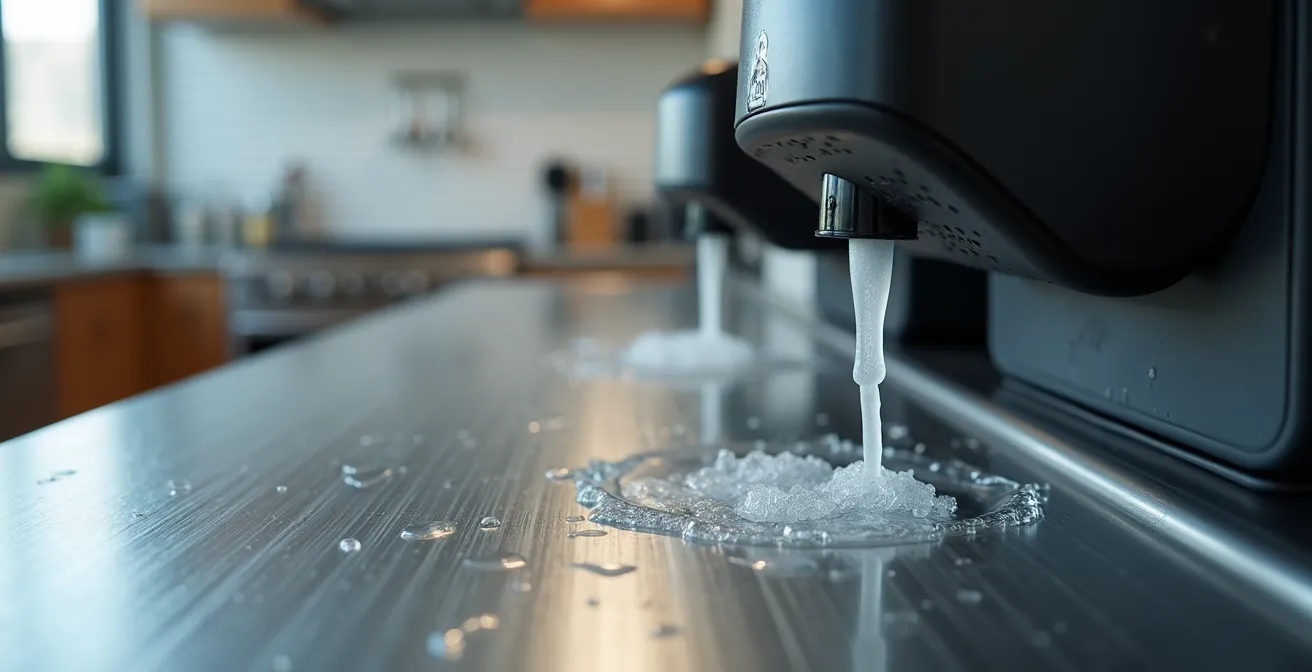
The risk isn’t confined to cooling towers, which are already heavily regulated by the Régie du bâtiment du Québec. It extends to all parts of a building’s plumbing that see infrequent use: decorative water features in the lobby, the ice machine in the breakroom, and even the taps in a rarely-used washroom. Water sits in the pipes, its temperature rises to the ideal range for bacterial growth (20°C to 50°C), and the disinfectant (chlorine) dissipates. When someone finally uses that tap or fountain, a plume of bacteria-laden water droplets is released into the air.
Managing this risk is a critical part of environmental systems management. It requires a proactive water safety plan. This plan should include:
- Scheduled Flushing: All taps, drinking fountains, and water features should be flushed weekly for several minutes to clear out stagnant water and draw fresh, chlorinated water into the pipes.
- Temperature Monitoring: Regularly test water temperatures at multiple points. Hot water should be maintained above 60°C and cold water below 20°C to inhibit bacterial growth.
- Appliance Maintenance: Ice machines and water coolers must be serviced and sanitized monthly according to manufacturer specifications.
- Documentation: Keep a detailed log of all water system flushing and maintenance activities. This is essential for demonstrating due diligence and compliance in the event of an inspection or outbreak.
This internal “irrigation” system is a hidden health liability. Proactively managing water safety is as important as managing air quality for preventing serious workplace illness.
Key takeaways
- True illness prevention in an office environment relies on managing environmental systems (air, water, chemicals), not just promoting personal hygiene.
- Upgrading HVAC systems to MERV 13 filters, creating zone-based disinfection schedules, and ensuring chemical storage safety are critical, high-impact actions.
- Compliance with Quebec’s CNESST regulations, including developing a formal prevention program, is a legal obligation for businesses with 20 or more employees.
Creating a Prevention Program That Meets CNESST Requirements for Small Businesses
In Quebec, the responsibility for workplace health and safety is formalized through the Act respecting occupational health and safety, which is enforced by the CNESST. Recent updates to the law have introduced significant new obligations. As of 2025, establishments with 20 or more workers are now legally required to develop and implement a formal prevention program. This program is not just a document; it’s a dynamic management system for identifying, analyzing, and controlling all workplace hazards.
For an office environment, this program must go beyond physical safety (like slip and fall hazards) to include a thorough assessment of biological, chemical, ergonomic, and psychosocial risks. As outlined in a summary of Quebec’s new OHS obligations, the program must include measures to eliminate risks at the source, maintain an inventory of hazardous substances (linking back to your WHMIS compliance), and be updated annually. The program must be submitted to the CNESST, with updates provided every three years.
For an HR Director, spearheading the creation of this program is a critical strategic function. It involves forming a health and safety committee (mandatory for 20+ workers), which must meet quarterly. The committee’s first task is to conduct a comprehensive risk analysis of the entire workplace. This process forces a systematic review of all the issues discussed in this article—from ventilation and disinfection to chemical storage and water safety—and documents the control measures put in place.
Your action plan: Step-by-step guide for CNESST prevention program compliance
- Hazard Identification: Systematically identify all biological hazards, including viruses and bacteria, present in the office setting. Document potential sources of transmission.
- Risk Analysis: For each identified hazard, complete a risk analysis documenting the likelihood of an incident and the potential severity of its consequences.
- Action Plan Development: Develop a concrete action plan with specific, measurable, achievable, relevant, and time-bound (SMART) measures to eliminate or control each identified risk.
- Program Submission & Review: Finalize and submit the prevention program to the CNESST. Conduct documented annual reviews of the program’s effectiveness with the health and safety committee.
- Update & Resubmit: Ensure the program is formally updated and resubmitted to the CNESST every three years, or sooner if significant changes occur in the workplace.
Failing to comply with these requirements not only puts your employees at risk but also exposes your organization to significant legal and financial penalties. Creating a robust prevention program is the ultimate expression of a commitment to environmental systems management and the cornerstone of a healthy, safe, and legally compliant Montreal workplace.