Urban Security
Modern cities face an unprecedented convergence of security challenges. From protecting crowded festival zones to deterring property crime, from managing vehicle threats to complying with evolving privacy regulations, urban security has become a multidisciplinary field requiring expertise in technology, law, design, and community engagement. For property managers, municipal planners, and security professionals in Montreal and similar dense urban environments, understanding this landscape is no longer optional—it’s essential to creating spaces where residents, workers, and visitors feel genuinely safe.
This comprehensive resource introduces the core pillars of urban security: smart surveillance technologies adapted to local conditions, regulatory frameworks specific to Montreal’s by-laws, environmental design principles that naturally deter crime, event security protocols for managing crowds, physical barriers protecting pedestrian zones, access control for sensitive perimeters, sustainability considerations, and integrated data systems that tie everything together. Whether you’re planning your first camera deployment or redesigning a public plaza, these foundational concepts will equip you with the knowledge to make informed, effective decisions.
Smart Surveillance Technology in Urban Environments
Video surveillance forms the backbone of many urban security strategies, but implementing effective systems in Montreal’s challenging climate requires careful planning. Unlike southern cities, Montreal installations must contend with extreme temperature swings—from -30°C winters to +30°C summers—along with heavy snow, ice accumulation, and seasonal rain that can obscure lenses and degrade image quality.
Selecting AI Analytics for Local Weather Conditions
Modern surveillance systems leverage artificial intelligence to automatically detect suspicious behavior, abandoned objects, or unauthorized access. However, standard algorithms trained in temperate climates often generate false alerts during snowstorms or when ice fog reduces visibility. When evaluating AI analytics platforms, prioritize vendors that offer weather-adaptive algorithms capable of adjusting sensitivity thresholds based on meteorological conditions. For example, a system monitoring a loading dock should recognize that slower pedestrian movement during an ice storm doesn’t constitute a security anomaly.
Understanding Camera Density and Deterrence
Research on the relationship between camera density and crime deterrence reveals a nuanced picture. Installing cameras everywhere doesn’t automatically reduce crime—strategic placement matters far more than sheer quantity. A well-positioned camera covering a building’s main entrance and side alley access points often provides better deterrence than five cameras all pointing at the front facade. The visible presence of cameras creates a psychological deterrent effect, but this effect plateaus once potential offenders recognize they’re under observation. Focus on covering access points, vulnerable zones, and areas with poor natural surveillance rather than achieving blanket coverage.
Cloud Storage vs On-Premise for Video Data
The decision between cloud-based and on-premise video storage involves balancing several factors specific to your situation. Cloud storage offers scalability, remote access, and elimination of physical server maintenance, making it attractive for multi-site operations or property managers without dedicated IT staff. However, uploading high-resolution footage from dozens of cameras requires substantial bandwidth—a consideration for older buildings with limited internet infrastructure. On-premise storage provides complete data control and works during internet outages, but requires upfront hardware investment and ongoing maintenance. Many Montreal facilities adopt a hybrid approach: storing recent footage locally for instant access while archiving older recordings to the cloud for long-term retention and disaster recovery.
Regulatory Compliance and Montreal’s Local By-Laws
Montreal’s regulatory environment governs far more than just surveillance cameras. Property managers and facility operators must navigate an interconnected web of municipal by-laws covering safety, noise, waste management, and construction. Non-compliance doesn’t just risk fines—it can expose you to liability if an incident occurs and you weren’t meeting baseline standards.
Property Safety and Management Regulations
Montreal’s property safety by-laws establish minimum standards for building security features, lighting levels, and access control in multi-unit residential and commercial buildings. These regulations often require adequate exterior lighting at entrances, functional locking mechanisms on common doors, and maintained fire safety equipment. Before implementing any security upgrades, verify compliance with these baseline requirements—you may discover that addressing regulatory gaps simultaneously improves your security posture and protects you from potential fines.
Navigating Fire Lane and Emergency Access Requirements
Fire lane regulations exist to ensure emergency vehicles can reach buildings quickly, but they directly impact security barrier placement and parking enforcement. Installing permanent bollards or retractable barriers to protect a building entrance from vehicle threats requires careful coordination with fire department access needs. Montreal’s fire services maintain specific requirements for unobstructed lane widths and turning radii. When designing vehicle security measures, engage with the Service de sécurité incendie de Montréal early in the planning process to identify solutions that satisfy both security and emergency access requirements—such as breakaway bollards or barriers with fire department override controls.
Balcony Safety, Waste Storage, and Construction Permits
Seemingly minor compliance issues can create security vulnerabilities. Deteriorating balconies aren’t just safety hazards—they can provide climbing access to upper floors. Improperly stored waste bins left in accessible areas become fire risks and attract vandalism. Any construction work, including security barrier installation or lighting upgrades, requires permits with specific timelines. Building a compliance calendar that tracks inspection schedules, permit renewal dates, and seasonal maintenance requirements helps prevent lapses that compromise both safety and legal standing.
Environmental Sustainability in Urban Security
Security infrastructure consumes significant resources—energy for lighting and cameras, materials for barriers and structures, water for landscaping that provides natural surveillance. Forward-thinking facilities are discovering that sustainable approaches often enhance security effectiveness while reducing operating costs and environmental impact.
Analyzing Energy Consumption and Optimizing Lighting
Traditional high-intensity discharge security lighting can account for a substantial portion of a facility’s energy consumption, particularly in properties maintaining 24/7 illumination. Modern LED solutions consume 50-75% less energy while providing superior color rendering—crucial for camera systems and human surveillance. Motion-activated or adaptive lighting that increases intensity when activity is detected offers additional savings without compromising security. When comparing lighting options, consider both the color temperature (measured in Kelvin) and Color Rendering Index (CRI). Lighting in the 4000-5000K range with high CRI provides excellent visibility for both cameras and human observers while creating an environment that feels secure rather than harsh.
Green Roofs and Sustainable Design Integration
Green roof installations serve multiple purposes beyond environmental benefits. While they reduce urban heat island effects and manage stormwater, they also create occupied space that enhances natural surveillance of surrounding areas. A rooftop garden or terrace with regular human presence deters unauthorized roof access and provides elevated sightlines over adjacent properties. However, green roofs require access control to prevent them from becoming security vulnerabilities themselves—balance public access during appropriate hours with secured access points and perimeter protection that prevents unauthorized entry or falls.
Securing Public Events and Large Gatherings
Montreal’s vibrant festival culture—from the International Jazz Festival to Just for Laughs—presents unique security challenges. Event security requires temporary infrastructure that can be rapidly deployed and removed while meeting rigorous safety standards and coordinating with multiple city agencies.
Calculating Crowd Capacity and Preventing Bottlenecks
Determining safe crowd capacity involves more than measuring available square footage. You must account for ingress and egress flow rates, emergency exit capacity, and circulation space that prevents dangerous compression. A common formula allocates 2-4 square feet per person for standing crowds, but bottleneck points—entrances, security checkpoints, bar areas—require additional space to prevent dangerous crowding. During the planning phase, map all entry and exit points, calculate their throughput capacity (typically 1-1.5 persons per foot of width per second), and identify potential bottleneck zones where crowds might accumulate faster than they can disperse.
Temporary Structures and Barrier Selection
The choice between barrier types depends on your specific threat assessment and crowd dynamics. Lightweight crowd control barriers work for guiding pedestrian flow but provide no vehicle protection. Water-filled barriers offer moderate vehicle resistance and can be positioned without heavy equipment, making them popular for temporary installations. For events requiring higher protection levels, steel bollards or reinforced concrete barriers provide tested impact ratings but require advance planning for installation and removal. Always verify that temporary structures meet Canadian Standards Association (CSA) requirements and consider weather impacts—wind loading on temporary fencing during Montreal’s notorious spring windstorms can create hazards if structures aren’t properly secured.
Coordinating with Emergency Services
Effective event security requires pre-event coordination with police, fire services, and emergency medical services. Share your site plan, including barrier locations, access points, and crowd capacity estimates, with relevant agencies at least two weeks before the event. Establish dedicated emergency vehicle access routes that remain clear throughout the event and identify designated areas where ambulances can stage. During the event, maintain direct communication channels with emergency dispatchers and position trained staff at key decision points who can rapidly authorize barrier removal or crowd redirection if an emergency evacuation becomes necessary.
Protecting Pedestrian Zones from Vehicle Threats
The rise of vehicle-based attacks against crowded pedestrian areas has transformed urban security planning. Montreal’s numerous pedestrian streets, outdoor cafés, and public plazas require protection solutions that maintain accessibility and aesthetic appeal while providing genuine security.
Understanding Impact Ratings and Standards
Vehicle security barriers are rated based on their ability to stop vehicles of specific weights traveling at defined speeds. Common ratings include M30 (5,000 kg vehicle at 48 km/h) and M50 (6,800 kg at 80 km/h). Selecting the appropriate rating requires assessing your specific threat scenario: is the greater risk an impaired driver accidentally mounting a curb, or a deliberate high-speed attack? For most urban applications protecting pedestrian zones near streets with speed limits of 50 km/h or less, M30-rated barriers provide adequate protection without the visual bulk and installation complexity of higher-rated systems.
Fixed vs Retractable Barrier Systems
Fixed bollards offer simplicity and reliability but permanently alter traffic patterns. Retractable systems allow authorized vehicle access for deliveries, special events, or emergency response while maintaining protection during normal operations. However, retractable barriers require electrical or hydraulic infrastructure, regular maintenance to prevent freeze-up during Montreal’s winters, and clear operational protocols defining who can authorize retraction. Consider a hybrid approach: fixed decorative bollards providing primary protection supplemented by removable sections at specific access points, secured with high-security locks and managed through a key control system.
Addressing Underground Utilities and Installation Challenges
Montreal’s dense underground infrastructure—water mains, sewers, electrical conduits, steam pipes, and metro tunnels—complicates barrier installation. Before finalizing barrier locations, obtain utility maps from Info-Excavation (Quebec’s one-call service) and conduct ground-penetrating radar surveys to identify subsurface obstacles. In areas with shallow utilities or limited installation depth, consider surface-mounted barriers that distribute impact forces across reinforced base plates rather than relying solely on embedment depth. While these may have aesthetic implications, they avoid costly utility relocations and reduce installation timelines.
Access Control for Logistics and High-Security Perimeters
Logistics hubs, industrial facilities, and critical infrastructure require sophisticated access control that balances security with operational efficiency. A gate system that creates 30-minute queues during shift changes will be circumvented or overridden, undermining security effectiveness.
Managing Peak Arrival Times and Traffic Flow
Analyze your facility’s traffic patterns to identify peak periods—typically shift changes, delivery windows, and special events. During these periods, vehicle processing must occur at rates that prevent queuing onto public streets. Solutions include multiple entry lanes with dedicated paths for pre-registered vehicles, advance scheduling systems that distribute arrivals across wider time windows, and expedited processing for frequent visitors enrolled in trusted driver programs. For facilities processing 50+ vehicles during peak hours, consider separated entry and exit gates to prevent conflicting traffic flows.
Under-Vehicle Inspection Technology
Under-vehicle inspection systems use cameras to capture images of vehicle undercarriages, which operators compare against databases or previous entries to detect anomalies. Modern systems automatically flag discrepancies, reducing the inspection time from several minutes with manual mirrors to under 30 seconds with automated scanning. For high-security applications, integrate under-vehicle scanners with license plate recognition and driver credential verification to create a multi-layer authentication process that confirms vehicle, driver, and purpose all match authorization records.
Training Guards on Contraband Detection and Conflict De-escalation
Technology enhances human capabilities but doesn’t replace the judgment of well-trained security personnel. Regular training should cover contraband detection techniques, behavioral observation skills, and most importantly, conflict de-escalation. Many security incidents at access points stem from poor communication—an irritated driver denied entry becoming confrontational, or a guard escalating a minor violation into a physical altercation. Training guards to explain denial reasons clearly, offer alternative solutions when possible, and recognize when to call for supervisor support prevents most conflicts from escalating while maintaining security standards.
Crime Prevention Through Environmental Design (CPTED)
CPTED represents a fundamental shift from reactive security (responding to incidents) to proactive design that naturally discourages criminal behavior. Rather than adding more cameras or guards, CPTED leverages architecture, landscaping, and space activation to create environments where crime is difficult and detection likely.
Improving Natural Surveillance
Natural surveillance means designing spaces so that legitimate users—residents, workers, passersby—can easily observe what’s happening. This discourages criminal activity because offenders recognize they’re visible. Practical applications include minimizing blind corners, using transparent materials instead of solid walls where appropriate, positioning windows to overlook entrances and parking areas, and ensuring landscaping doesn’t create hidden zones. A common mistake involves planting dense shrubs near building entrances for aesthetics; these create concealment opportunities that offset the visual appeal. Instead, use low plantings (under 60 cm) near walkways and windows while restricting taller vegetation to areas away from access points.
Territorial Reinforcement and Space Activation
Territorial reinforcement uses design elements to clearly delineate public, semi-public, and private spaces, helping both legitimate users and potential offenders recognize where they’re welcome. Physical markers like changes in paving, low decorative fencing, or lighting transitions signal boundaries without creating fortress-like barriers. Equally important is space activation—programming areas with legitimate activities that attract regular users. A plaza with scheduled farmers’ markets, outdoor performances, or food vendors becomes self-policing through the constant presence of people who care about the space. Unused spaces attract undesirable activity precisely because no one with a stake in the area is present to question it.
Strategic Lighting and Graffiti Prevention
Lighting serves CPTED by extending natural surveillance into nighttime hours and eliminating dark zones that conceal activity. However, effective CPTED lighting isn’t about maximum brightness—it’s about eliminating contrast between brightly lit and shadowed areas. Uniform, moderate illumination across an entire zone proves more effective than intense spotlights creating adjacent dark areas. For graffiti prevention, rapid removal remains the most effective strategy. Graffiti attracts more graffiti, signaling that no one monitors or cares for the space. Establish a 24-48 hour removal protocol and consider anti-graffiti coatings on vulnerable surfaces that allow cleanup with pressure washing rather than repainting.
Integrated Security Systems and Data Management
Modern urban security increasingly depends on integrating multiple data streams—video surveillance, access control logs, traffic sensors, environmental monitors—into unified platforms that provide comprehensive situational awareness and enable coordinated responses.
Integrating Traffic and Security Feeds
Municipal traffic management systems collect real-time data on vehicle flows, congestion points, and traffic signal status. Integrating this information with security feeds allows operators to distinguish between normal traffic variations and genuine anomalies. A sudden vehicle queue might indicate a security incident requiring response, or simply a traffic signal malfunction creating backups. Correlated data prevents wasted responses to false alarms while helping identify genuine incidents faster. For facilities near major intersections, requesting access to municipal traffic camera feeds can provide advance warning of approaching protesters, emergency situations, or traffic incidents that will affect your operations.
Bandwidth Prioritization and Data Sharing Across Agencies
Integrated systems generate enormous data volumes, potentially overwhelming available network bandwidth. Implement Quality of Service (QoS) protocols that prioritize critical security data—live alarm signals and real-time video from active incidents—over routine footage and archived recordings. When sharing data with police, fire services, or other municipal agencies, establish clear protocols governing what information is shared, under what circumstances, and with what privacy protections. Montreal’s privacy legislation requires that data sharing arrangements be documented and that individuals have recourse to understand how their data is used.
Preventing Cyber Vulnerabilities in Connected Systems
Every connected security device represents a potential entry point for cyber attackers seeking to disable security systems, steal surveillance footage, or use your cameras as jumping-off points for broader network attacks. Fundamental protections include segregating security networks from general IT networks, changing all default passwords to strong unique credentials, implementing regular firmware updates, and disabling unused services on security devices. For critical facilities, conduct regular penetration testing specifically targeting security infrastructure and maintain an incident response plan that addresses scenarios where security systems themselves are compromised.
Urban security excellence emerges from understanding how these elements interconnect. Your surveillance system’s effectiveness depends on compliance with privacy regulations. Your event security plan relies on CPTED principles that guide crowd flow. Your access control system must integrate with emergency response protocols. By building foundational knowledge across all these domains, you’ll be equipped to develop comprehensive security strategies tailored to your specific environment, threats, and community needs.

Architecting Montreal’s Digital Nervous System: Integrating Camera Networks for Predictive Emergency Response
The future of Montreal’s emergency response isn’t about adding more cameras; it’s about architecting a smarter, unified ‘Digital Nervous System’ that predicts and automates reactions. AI-driven incident detection is exponentially faster than manual monitoring, reducing response times from minutes to…
Read more
Applying CPTED Principles to Montreal’s Urban Prevention Protocols
True urban safety in Montreal is not achieved by adding security hardware, but by architecting human behaviour through intelligent environmental design. Subtle cues like paving textures and strategic lighting are more effective at defining territory and deterring crime than overt…
Read more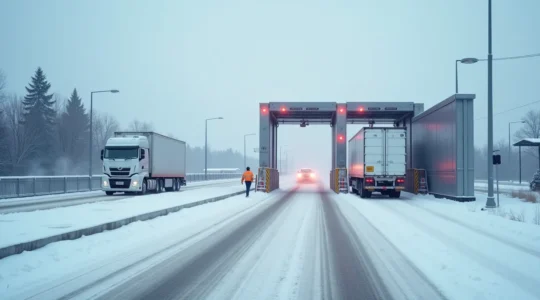
Checkpoint Design Command: A Guide to Efficient Vehicle Screening for High-Security Montreal Sites
In summary: Effective checkpoint design is not about technology alone, but about mastering the operational friction caused by traffic, weather, and regulations. Adopt a “Triage and Divert” model to isolate complex searches and maintain primary lane throughput, preventing gridlock. For…
Read more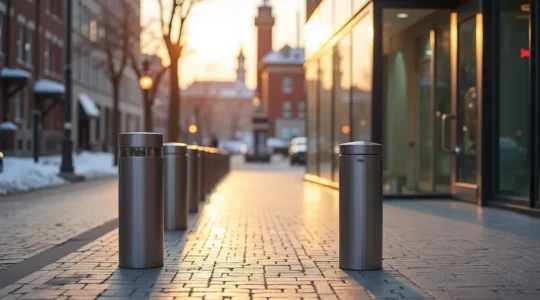
Installing Anti-Ram Bollards in Montreal: Aesthetics vs Crash Ratings
For Montreal landscape architects, selecting an anti-ram bollard is not a choice between safety and style, but a technical exercise in fusing them. Success requires understanding the physics of K-ratings versus real-world site constraints and threat levels. Engineers must plan…
Read more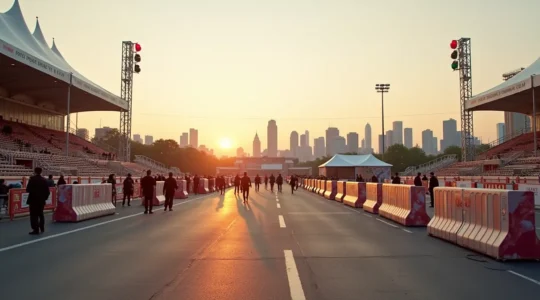
Meeting Municipal Safety Standards for Large Outdoor Events in Montreal
Successfully navigating Montreal’s event safety regulations is not about checking boxes, but mastering the operational logic behind them to proactively mitigate risk. Theoretical site capacity is irrelevant; effective capacity is dictated by the precise, calculated flow rate of your emergency…
Read more
Beyond Recycling: A Strategic Guide to Slashing the Environmental Footprint of Montreal’s Large Venues
True sustainability for Montreal’s venues is no longer about simple gestures; it’s a strategic overhaul of integrated systems that directly impacts the bottom line. Engaging with Hydro-Québec’s demand response programs can turn peak energy usage from a cost into a…
Read more
Montreal Property Manager’s Guide to Avoiding Common Compliance Fines
Navigating Montreal’s bylaws is less about memorizing rules and more about understanding the operational “blind spots” where inspectors frequently find violations. Noise, snow, and waste aren’t just tenant issues; they are primary sources of direct owner liability and significant fines….
Read more
Architecting Urban Security: How Smart Surveillance Reduces Crime in Montreal
Effective security in Montreal isn’t about camera quantity; it’s about the quality of the intelligence your system generates and its compliance with local realities. Tailoring surveillance AI for Quebec’s harsh winters is non-negotiable for year-round reliability and preventing false alarms….
Read more